PET vs PP Storage Organizers: Why Clear Bins Look Cloudy
Monica Zhang
6/2/2026
If you have sourced clear storage organizers before, you may have noticed something interesting.
Some clear bins look crystal-clear and premium, while others appear cloudy, slightly yellow, or visually “heavy” — even when the overall shape and design look almost identical.
At first glance, many buyers assume the difference comes from branding, photography, or packaging. In reality, the difference often starts much earlier. It begins with material behavior, mold precision, cooling system design, and how carefully a factory manages the injection molding process itself.
For modern home organization brands — especially in the North American market — these technical details are no longer small manufacturing issues hidden behind the scenes. They directly affect retail appearance, consumer perception, product returns, and ultimately, brand positioning.
1. Understanding the Real Difference Between PP and PET
When people compare Polypropylene (PP) and Polyethylene Terephthalate (PET), most sourcing articles simplify the comparison into something like this:
● PP is cheaper and flexible.
● PET is clearer and more rigid.
Technically, this is true. But from a manufacturing perspective, the deeper difference is actually about processing tolerance.
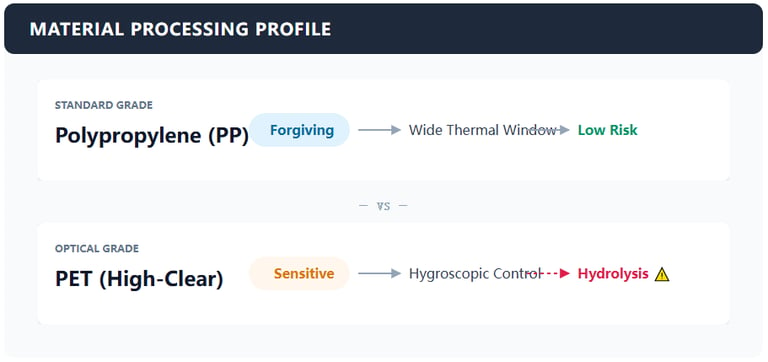
PP is generally considered a forgiving material. It flows more easily during injection molding, has a wider processing window, and is less sensitive to small variations in mold temperature or cooling speed. Even when machine settings are not perfectly optimized, PP products can still maintain stable functionality and acceptable appearance.
PET behaves very differently. It is a far more sensitive material, especially when the goal is to achieve high transparency and a clean premium look.
One major reason is that PET naturally absorbs moisture from the surrounding air. If the raw material is not dried properly before production, the trapped moisture can affect clarity during injection molding, leading to haze, brittleness, or uneven transparency. This is one reason why two organizers made from “PET” can still look completely different on a retail shelf.
For factories producing premium clear organizers, PET processing requires much tighter control over material drying, mold temperature, cooling balance, injection pressure, cycle timing, and tooling precision. Small inconsistencies in these areas can immediately become visible on transparent products.
And transparency is unforgiving — it reveals everything.
2. Why Cooling Line Design Matters More Than Most Buyers Realize
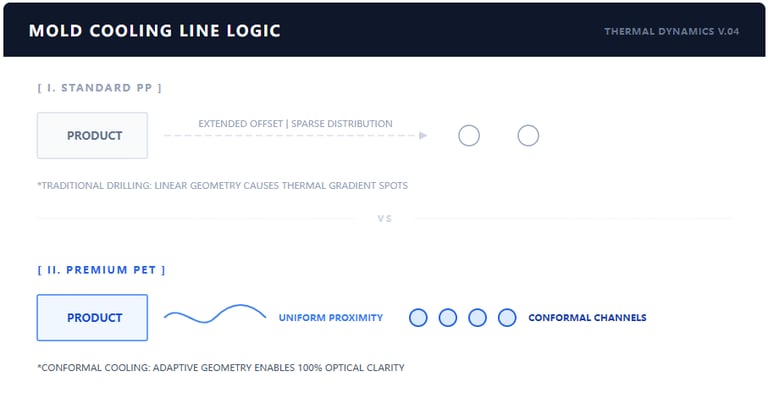
Over the past several years, many factories originally focused on PP household products expanded into PET organizers because of growing global demand for clear storage collections. However, PET and PP require very different mold engineering logic. One of the biggest differences lies in cooling system design.
PP can tolerate relatively simple cooling structures because the material itself is more stable during processing. PET cannot. Clear PET products are highly sensitive to uneven cooling. If the mold cooling channels are not designed properly, heat will dissipate unevenly throughout the product during molding. This can create several common visual defects:
● Visual Haze: Slight cloudiness that ruins the premium glass-like effect under heavy shelf lighting.
● Thermal Stress Marks: Inconsistent material density near tight corners, creating structural weak points.
● Optical Distortion: Flow marks and weld lines across the walls that warp light reflection and look cheap.
● Yellowish Visual Tone: Discoloration caused by local overheating when the heat cannot escape fast enough.
In many low-cost products, these issues may seem minor individually. But once placed under strong retail lighting or photographed for e-commerce listings, the difference becomes surprisingly obvious.
For premium PET organizers, mold cooling systems usually require much more careful engineering, especially around deep corners, thick walls, and high-transparency surfaces. Factories focused on optical clarity often invest more heavily in balanced cooling layouts, stable mold temperature control, precision tooling, and longer optimization cycles during mold testing.
These are not always visible on a quotation sheet. But they become extremely visible in the final product.
3. The Rise of “Invisible Storage” in North America
In North America, consumer expectations for home organization products have changed dramatically over the past few years. Storage products are no longer viewed as purely functional plastic containers. Today, many consumers want organizers to visually disappear into the space.
Modern pantry, fridge, and bathroom collections increasingly follow what many buyers internally describe as an “invisible storage” aesthetic:
● Ultra-Clear Transparency: Seamless integration into modern cabinetry.
● Smooth Reflective Surfaces: High-gloss finishes that reflect clean home interiors.
● Minimal Visual Distortion: Zero warping when viewing items through the bin walls.
● Clean Edges & Premium Tactile Feel: Safe, smooth, and heavy-duty ergonomics.
This is one reason why high-quality PET organizers continue gaining popularity across premium retail programs. Consumers want products that feel visually clean, lightweight, and modern. Under this trend, even slight visual haze or yellow undertones can quickly reduce perceived product value. This is especially true for pantry organizers, refrigerator bins, turntables, cosmetic organizers, and bathroom storage collections.
Because these products are constantly visible inside the home, appearance becomes part of the user experience itself. For many North American brands, clarity is no longer simply a technical specification. It has become part of the brand identity.
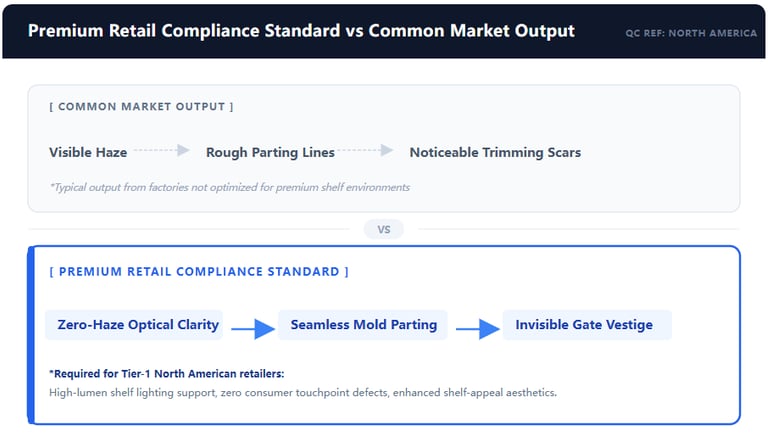
To meet this "invisible" standard, retail giants have established strict quality benchmarks. Products that fail these metrics never make it to premium shelves. Here is how standard market outputs compare to premium retail compliance standards:
4. Mold Steel Quality Quietly Shapes the Final Product
Another factor many buyers underestimate is the tooling material itself. Transparent surfaces amplify imperfections. That means mold quality becomes critically important for PET organizers.
When lower-grade mold steel gradually wears down over long production cycles, the finished surface quality often declines as well. Small abrasions or inconsistent polishing can affect how light reflects across the organizer surface. The result may not always look like an obvious defect. Instead, the product simply loses its “premium feel.” Experienced buyers usually notice this immediately when comparing products side by side.
For higher-end PET collections, factories often use better mold steels and higher polishing standards to maintain:
● Cleaner Transparency: Avoiding micro-scratches on the tool face.
● Better Gloss Consistency: Ensuring the first batch looks identical to the 100th batch.
● Smoother Surface Reflection: Maximizing that clean, premium premium-shelf aesthetic.
These tooling decisions increase upfront manufacturing cost, but they also help brands maintain a more premium retail appearance over time.
5. Different Factories Optimize for Different Priorities
In reality, different manufacturers optimize for completely different business models. Some factories focus primarily on faster production speed, lower unit cost, high-volume output, and aggressive pricing. Others focus more heavily on optical clarity, surface consistency, material stability, long-term tooling performance, and premium retail positioning.
Neither approach is automatically right or wrong. The ideal manufacturing strategy depends entirely on the brand’s market positioning, retail channel, and customer expectations. A low-cost promotional storage line may prioritize price efficiency. A premium home organization brand may prioritize transparency, finish quality, tactile feel, and long-term consistency.
The important thing is making sure the manufacturing process actually matches the final retail goal.
A More Collaborative Approach to Clear PET Manufacturing
At Storaplast, we continue exploring how material selection, tooling precision, and flexible manufacturing systems can better support modern home organization brands across North America and beyond.
Our focus is not simply producing plastic organizers. We are more interested in understanding how manufacturing details influence retail perception, long-term quality consistency, and the overall customer experience. Because in clear storage products, small technical differences often become highly visible — especially when consumers interact with them every day inside their homes.
If you are currently developing clear PET storage collections and would like to discuss OEM possibilities, product positioning, or manufacturing feasibility, feel free to connect with our team.
Explore our clear PET product range → storaplast.com/clear-pet-turntable-organizer
Direct inquiry: WhatsApp Monica at +86 159 6894 1087 — typical response within 24 hours.
About the Author
Monica | Storaplast
10+ years in OEM production management for international home & retail brands. Specializing in storage solutions, private label development, and scalable manufacturing partnerships.